Breakfast Club and After-School Club Costs: What Wraparound Care Costs While Free Clubs Roll Out (2026)
KEY TAKEAWAYS
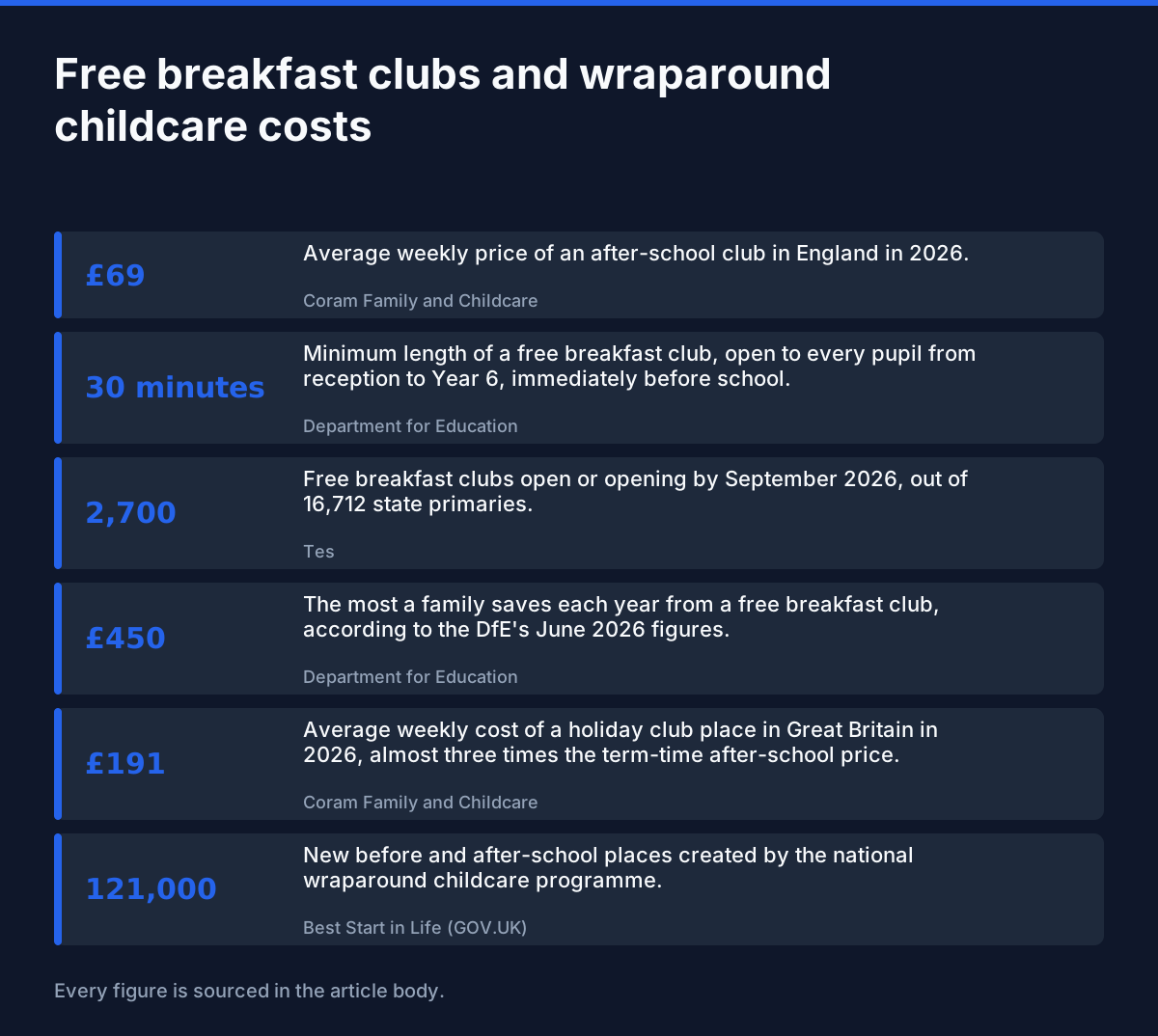
- → £69 Average weekly price of an after-school club in England in 2026. (Coram Family and Childcare, 2026)
- → 30 minutes Minimum length of a free breakfast club, open to every pupil from reception to Year 6, immediately before school. (Department for Education, 2026)
- → 2,700 Free breakfast clubs open or opening by September 2026, out of 16,712 state primaries. (Tes, 2026)
- → £450 The most a family saves each year from a free breakfast club, according to the DfE's June 2026 figures. (Department for Education, 2026)
- → £191 Average weekly cost of a holiday club place in Great Britain in 2026, almost three times the term-time after-school price. (Coram Family and Childcare, 2026)
- → 121,000 New before and after-school places created by the national wraparound childcare programme. (Best Start in Life (GOV.UK), 2026)
- → 85% Share of childcare costs, including breakfast and after-school clubs, that Universal Credit can pay back. (HM Government (GOV.UK), 2026)
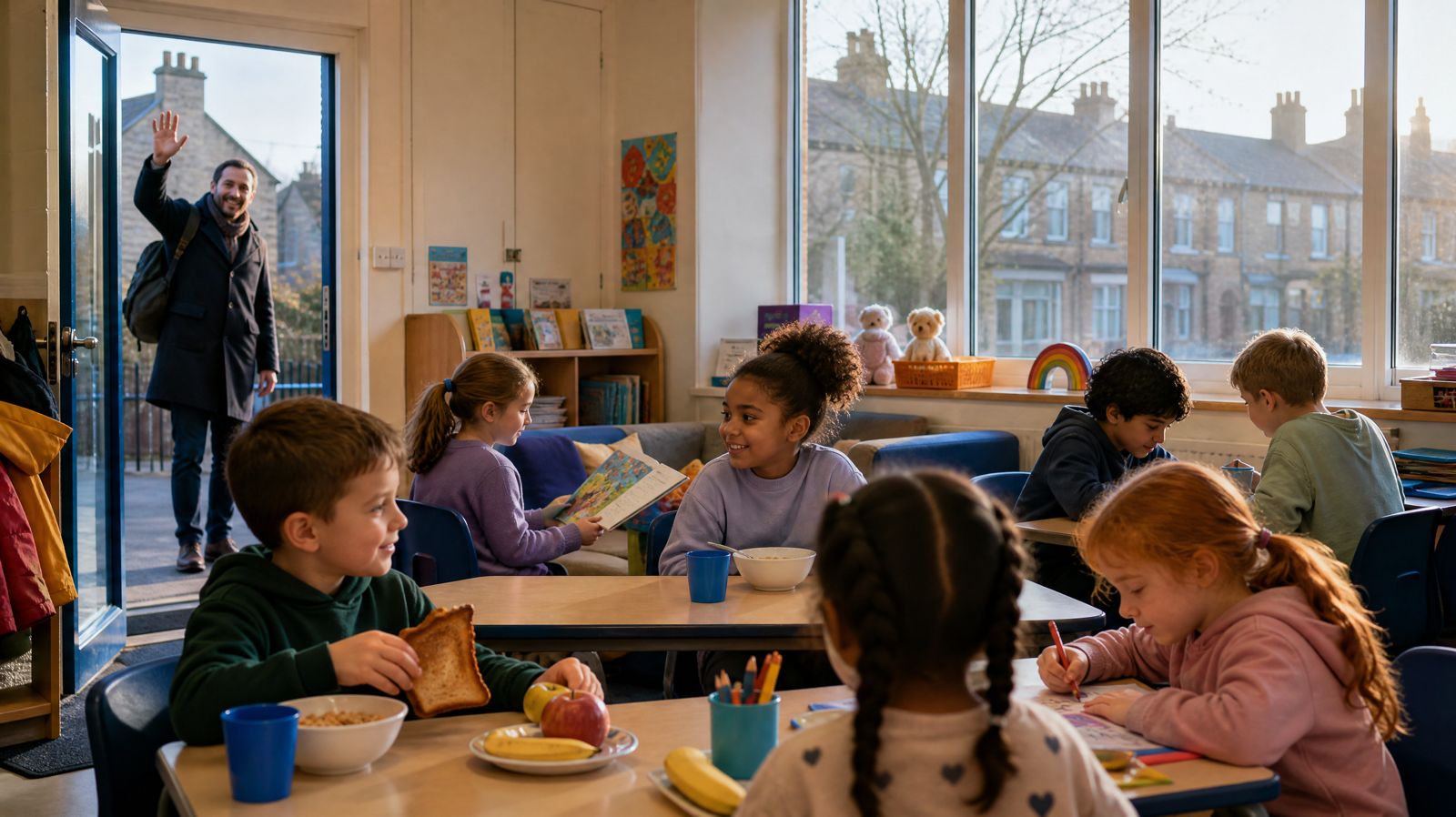
Free breakfast clubs are a major change to before-school childcare, but for most families they have not arrived yet. Tes estimates that around 14,000 of England's state primary schools still had no free breakfast club this September (Tes, 2026), which means most parents are still paying for the first half hour of the day, and nearly all are paying for the end of it.
This guide sets out where the rollout has reached, exactly what a free breakfast club has to include, what the government says families save (it has published two different figures), what before and after-school care costs in the meantime, and how working parents can claim a large share of it back. Every figure links to its source, mostly the Department for Education and Coram Family and Childcare's annual surveys.
It is written for parents of primary-age children, particularly working families who have just started paying for care around the school day, or who are trying to work out whether the free breakfast club changes their sums. If your child is in reception, this is also the year the cost of wraparound care tends to become visible for the first time.
1 Does Your Child's School Have a Free Breakfast Club Yet? About 14,000 Don't
Probably not yet. More than 2,700 free breakfast clubs were open or opening by September 2026, out of 16,712 state primary schools in England (Tes, 2026). The government's target is every primary by 2029, but Tes calculates that at the current pace the rollout would not finish until 2033.
| METRIC | VALUE | SOURCE |
|---|---|---|
| State primary schools in England | 16,712 | Tes |
| Primaries without a free breakfast club (estimate) | 14,000 | Tes |
| Clubs open or opening by Sept 2026 | 2,700 | Tes |
| Early adopter schools | 750 | Department for Education |
| New schools joining in 2026-27 | 2,000 | Department for Education |
| Rollout investment, 2026-27 | £80 million | Department for Education |
| Government target year | 2029 | Tes |
| Finish year at current pace (Tes) | 2033 | Tes |
The rollout began with 750 early adopter schools in April 2025. The national phase that started in April 2026 adds 2,000 more, backed by £80 million of funding (Department for Education, 2026), and the government says more schools will join in 2027 and 2028. Schools with the highest share of pupils on free school meals were prioritised first, so a school in a more deprived area is more likely to have one already.
Tes's analysis is the reason to plan as if your school has not joined yet. It counted around 14,000 primaries still without a club (Tes, 2026), and school leaders' unions have warned that staffing, costs and the effect on existing paid wraparound care are slowing some schools down. You will not need to apply separately if your school joins: schools contact families directly. Until then, an existing paid club such as our Bre-Egg Fast Club covers the morning.
A practical way to check: look on your school's website for a breakfast club page, or ask the office whether the school is in the national free breakfast clubs programme and, if so, which phase. If it is not, ask whether it has applied. Schools that have signed up have to tell families how to register, and existing paid clubs often change their prices or times when the free half hour arrives, so it is worth asking before you book a full term in advance.
2 What Does a Free Breakfast Club Include? 30 Minutes, Reception to Year 6
A free breakfast club must run for at least 30 minutes immediately before the school day, be open to every pupil from reception to Year 6, and serve a breakfast that meets the school food standards (Department for Education, 2026). Schools cannot cap places, but they can run a longer club and charge for the extra time.
| METRIC | VALUE | SOURCE |
|---|---|---|
| Minimum length of free club | 30 minutes | Department for Education |
| Pupils it must be open to | reception to Year 6 | Department for Education |
| Funding per attending pupil per day | £1 | Department for Education |
| Funding per day for fixed costs | £25 | Department for Education |
| Start-up grant | £1,000 | Department for Education (Education Hub) |
| Typical annual funding at 50% take-up | £29,500 | Department for Education (Education Hub) |
The detail that matters most to working parents is the length. Thirty minutes covers a drop-off at around twenty past eight for a school that starts at ten to nine, not an eight o'clock start. The DfE's guidance lets schools offer a longer paid club alongside the free half hour, but says parents must pay a lower fee than they did before the free club existed, that no child can be required to attend the paid part to get the free part, and that schools must not add any charge that could deter families (Department for Education, 2026).
Schools receive £1 for each pupil who attends each day plus £25 a day towards staffing and other fixed costs (Department for Education, 2026), and new schools get a £1,000 start-up grant. The DfE says an average-sized school with half its pupils attending would receive around £29,500 a year (Department for Education (Education Hub), 2026). Those figures help explain why some schools are cautious: a club with low take-up still has to staff the room.
In practice this creates three kinds of morning offer, and it helps to know which your school runs. Some schools run only the free half hour. Some run a longer club where the first part is charged and the final half hour is free. A few run the free club alongside a separate paid provider on the same site. If your working hours mean you need care from eight o'clock, ask how the free and paid parts fit together, what the new fee is, and whether you can book only the days you need.
3 How Much Do Free Breakfast Clubs Save Families? £450 or £650?
The DfE's latest figure, from June 2026, is that families save up to £450 and 95 hours a year (Department for Education, 2026). An earlier DfE Education Hub article put the saving at around £650. The honest answer depends on what your school charged before and how many mornings you use it.
| METRIC | VALUE | SOURCE |
|---|---|---|
| Children using free clubs (June 2026) | 300,000 | Department for Education |
| Clubs open (June 2026) | 1,250 | Department for Education |
| Free breakfasts served | 10 million | Department for Education |
| Hours of childcare unlocked | 5 million | Department for Education |
| Family saving per year (June 2026) | £450 | Department for Education |
| Family saving per year (Feb 2026 article) | £650 | Department for Education (Education Hub) |
| Hours saved per family per year | 95 hours | Department for Education |
| Reported attainment boost | two months | Department for Education (Education Hub) |
Both numbers come from the Department for Education, and the gap between them is worth knowing about before you budget around either. The February Education Hub article said parents could save around £650 a year (Department for Education (Education Hub), 2026); the June press release, published once 300,000 children were using 1,250 clubs, says up to £450 (Department for Education, 2026). A family that never used a paid breakfast club saves nothing in cash, though it may gain working time. A family that paid for every morning saves the most.
The time figure is steadier: both sources describe the free half hour as worth around 95 hours a year to parents. The DfE also says breakfast clubs have been shown to boost reading, writing and maths by an average of two months (Department for Education (Education Hub), 2026). That is an evidence summary rather than a new trial, but it fits with what schools report about calmer starts and better attendance. For children who need more than a calm start, our top-up tuition and free Key Stage 1 resources help with the basics.
4 What Does After-School Care Cost? £69 a Week in England
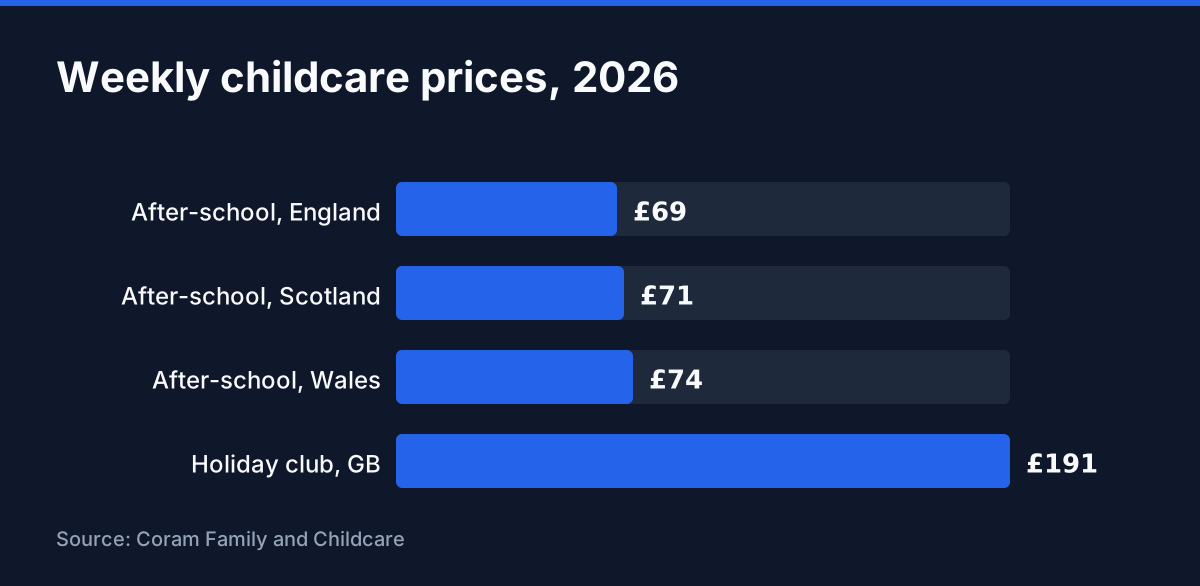
Coram Family and Childcare's 2026 Childcare Survey puts the average price of an after-school club at £69 in England, £71 in Scotland and £74 in Wales (Coram Family and Childcare, 2026). Holiday clubs cost far more, at £191 per child per week across Great Britain (Coram Family and Childcare, 2026).
| METRIC | VALUE | SOURCE |
|---|---|---|
| After-school club, England | £69 | Coram Family and Childcare |
| After-school club, Scotland | £71 | Coram Family and Childcare |
| After-school club, Wales | £74 | Coram Family and Childcare |
| Holiday club, per child per week (GB) | £191 | Coram Family and Childcare |
| Six-week summer holiday childcare | £1,145 | Coram Family and Childcare |
| Extra cost of six weeks' holiday club over after-school | £726 | Coram Family and Childcare |
| Typical wraparound hours | 8am until 6pm | Best Start in Life (GOV.UK) |
The free breakfast club does nothing for the end of the day, and that is where most of the cost sits. Wraparound care typically runs from 8am until 6pm (Best Start in Life (GOV.UK), 2026), and the after-school half is longer and dearer. Coram does not publish a figure for each English region, so treat £69 as a national benchmark: rural areas and London tend to sit at the extremes, and many clubs price per session, which suits families who only need two or three afternoons.
The bigger jump comes in the holidays. Coram's 2026 Holiday Childcare Survey found a six-week summer costs an average of £1,145 per child, and six weeks of holiday club costs £726 more than the same six weeks of after-school care (Coram Family and Childcare, 2026). If you are building a year-round childcare budget, plan holidays separately. Our Fun Vibes holiday club and CRE-ATE clubs cover Nelson and Brierfield. If your child qualifies for free school meals, our guide to free HAF holiday clubs explains who can get a free place.
When comparing quotes, check what is included. Some after-school clubs provide a snack or tea, homework time and pick-up from the classroom; others charge extra for late collection or for days you book at short notice. A club that looks cheaper per session can cost more over a term if it charges for every day whether or not your child attends, so ask about booking rules and notice periods as well as the headline price.
5 How Can You Cut the Cost of Wraparound Care? Claim Back Up to 85%
Families on Universal Credit can claim back up to 85% of childcare costs (HM Government (GOV.UK), 2026), and other working parents can use Tax-Free Childcare, which adds up to £2,000 per child a year (HM Government (GOV.UK), 2026). Both work for breakfast and after-school clubs, as long as the provider is registered.
| METRIC | VALUE | SOURCE |
|---|---|---|
| Universal Credit childcare repayment | 85% | HM Government (GOV.UK) |
| Tax-Free Childcare maximum top-up per year | £2,000 | HM Government (GOV.UK) |
| New wraparound places created nationally | 121,000 | Best Start in Life (GOV.UK) |
| Average after-school club, England | £69 | Coram Family and Childcare |
Registration is the condition that catches people out. Both schemes only pay for Ofsted-registered childcare, and some school-run breakfast clubs are exempt from registration because the school runs them for its own pupils. Ask the provider before you assume you can claim. Tax-Free Childcare adds £2 for every £8 you pay into your account; Universal Credit pays back costs you have paid, and GOV.UK says families who cannot afford to pay a provider upfront may be able to get help with that too.
Supply is improving as well as price. The national wraparound programme says it has created over 121,000 new before and after-school places (Best Start in Life (GOV.UK), 2026), often in community settings rather than schools. If your school does not offer care at the times you need, a community provider nearby may. You can see our current registration forms and pricing, or ask our team which sessions qualify for childcare support.
Explore every figure in this article
Methodology
We built this page from the Department for Education's free breakfast clubs guidance for the national rollout, its Education Hub article and June 2026 press release, Tes's September 2026 analysis of the rollout, Coram Family and Childcare's 2026 Childcare Survey and 2026 Holiday Childcare Survey, the government's Best Start in Life wraparound page, and GOV.UK guidance on Tax-Free Childcare and Universal Credit childcare. Every figure was checked against the live source page on 3 October 2026. Limits: Coram publishes after-school prices for England as a whole, so there is no Lancashire figure; the number of schools without a free breakfast club is a Tes estimate because the DfE declined to give an exact count; and the DfE has published two different family-savings figures, both shown here. The Reddit leg of the recency check returned mostly unrelated results, so recency relied on web sources.
- Sources consulted: 22
- Sources cited: 9
- Data freshness: current year: 9, last year: 0, older: 0
- Data range: 2026-02-01 to 2026-10-03
- Research date: 2026-10-03
- Update schedule: Each spring (Coram Childcare Survey) and summer (Coram Holiday Childcare Survey), and as new rollout phases are announced
- Limitations: Coram publishes after-school prices for England as a whole, not by English region or council, so no Lancashire-specific figure exists. The count of schools without a free breakfast club is a Tes estimate; the DfE declined to give an exact number. The DfE has published two different savings figures (around £650 and up to £450).
Frequently Asked Questions
Does my child's school have a free breakfast club?
Probably not yet. Tes estimates around 14,000 of England's 16,712 state primaries had no free breakfast club in September 2026, with more than 2,700 open or opening. Schools that join contact families directly, so ask your school office whether it is in a funded phase. (Tes, 2026)
How long is a free breakfast club?
At least 30 minutes, immediately before the start of the school day, open to every pupil from reception to Year 6. Schools can run a longer club and charge for the extra time, but the DfE says the paid fee must be lower than before, reflecting that 30 minutes is free. (Department for Education, 2026)
How much does an after-school club cost in England?
Coram Family and Childcare's 2026 Childcare Survey puts the average price of an after-school club at £69 in England, compared with £71 in Scotland and £74 in Wales. Prices vary by school and provider, and many clubs charge per session rather than per week. (Coram Family and Childcare, 2026)
How much will a free breakfast club save me?
The DfE's June 2026 figures say families save up to £450 and 95 hours a year. An earlier DfE Education Hub article put the saving at around £650. The real figure depends on what your school's breakfast club charged before and how often you use it. (Department for Education, 2026)
Can I use Tax-Free Childcare for breakfast and after-school clubs?
Yes, if the club is registered with Ofsted. The government adds £2 for every £8 you pay, up to £2,000 per child a year. Families on Universal Credit can instead claim back up to 85% of childcare costs, including wraparound care. (HM Government (GOV.UK), 2026)
Is holiday childcare more expensive than after-school care?
Much more. Coram's 2026 Holiday Childcare Survey found holiday clubs average £191 per child per week in Great Britain, almost three times the term-time after-school price, and six weeks of holiday club cost £726 more than six weeks of after-school care. (Coram Family and Childcare, 2026)
Sources & References
- Tes. "Free breakfast clubs scheme will take 7 years at current pace." tes.com/magazine/news/primary/free-breakfast-clubs-for-primary-schools-scheme-ta. Accessed 2026-10-03.
- Department for Education. "Free breakfast clubs: guidance for schools and trusts (phase 1 national rollout)." gov.uk/government/publications/free-breakfast-clubs-guidance-for-schools-and-tru. Accessed 2026-10-03.
- Department for Education (Education Hub). "Free breakfast club roll out: everything you need to know." educationhub.blog.gov.uk/2026/02/free-breakfast-club-roll-out-everything-you-nee. Accessed 2026-10-03.
- Department for Education. "10 million free breakfasts served in schools across country." gov.uk/government/news/10-million-free-breakfasts-served-in-schools-across-count. Accessed 2026-10-03.
- Coram Family and Childcare. "Childcare Survey 2026." coramfamilyandchildcare.org.uk/research/childcare-survey-2026/. Accessed 2026-10-03.
- Coram Family and Childcare. "Holiday Childcare Survey 2026." coram.org.uk/news/holiday-childcare-survey-2026/. Accessed 2026-10-03.
- Best Start in Life (GOV.UK). "Wraparound childcare." beststartinlife.gov.uk/childcare-early-years-education/breakfast-clubs-and-wrapa. Accessed 2026-10-03.
- HM Government (GOV.UK). "Tax-Free Childcare." gov.uk/tax-free-childcare. Accessed 2026-10-03.
- HM Government (GOV.UK). "Universal Credit and childcare." gov.uk/help-with-childcare-costs/universal-credit. Accessed 2026-10-03.
Last updated: